How to Address a Wedding Invitation
Original text by Alexandra Barbosa on A Pajarita.
English translation/ adaptation by Best of Portugal Weddings.
21/05/2026
More than simply sharing a date and a place, a wedding invitation sets the tone for the celebration to come.
Today I want to talk about the experience of receiving a wedding invitation in your mailbox.
You arrive home at the end of the day. You walk in with your keys in hand, your mind slowly switching off from work matters. Distractedly, you open your mailbox and there it is, waiting for you.
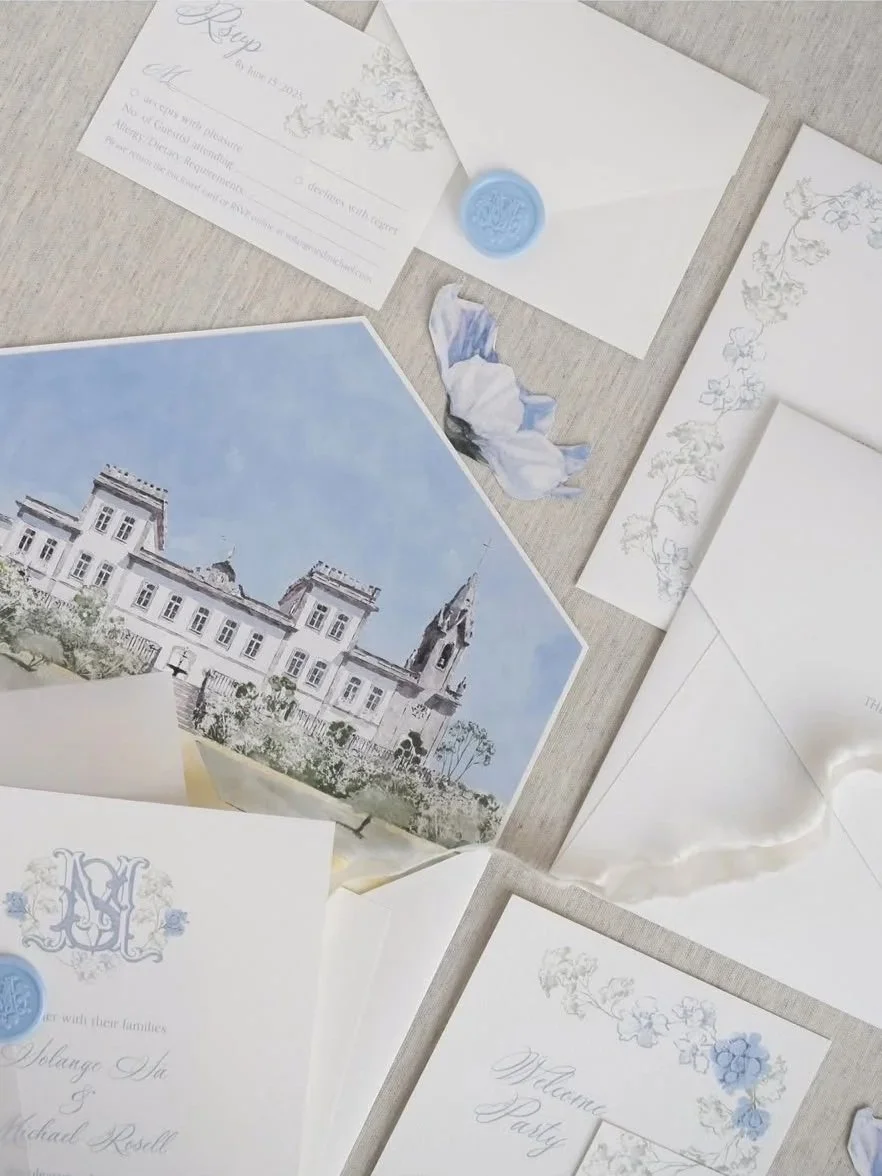
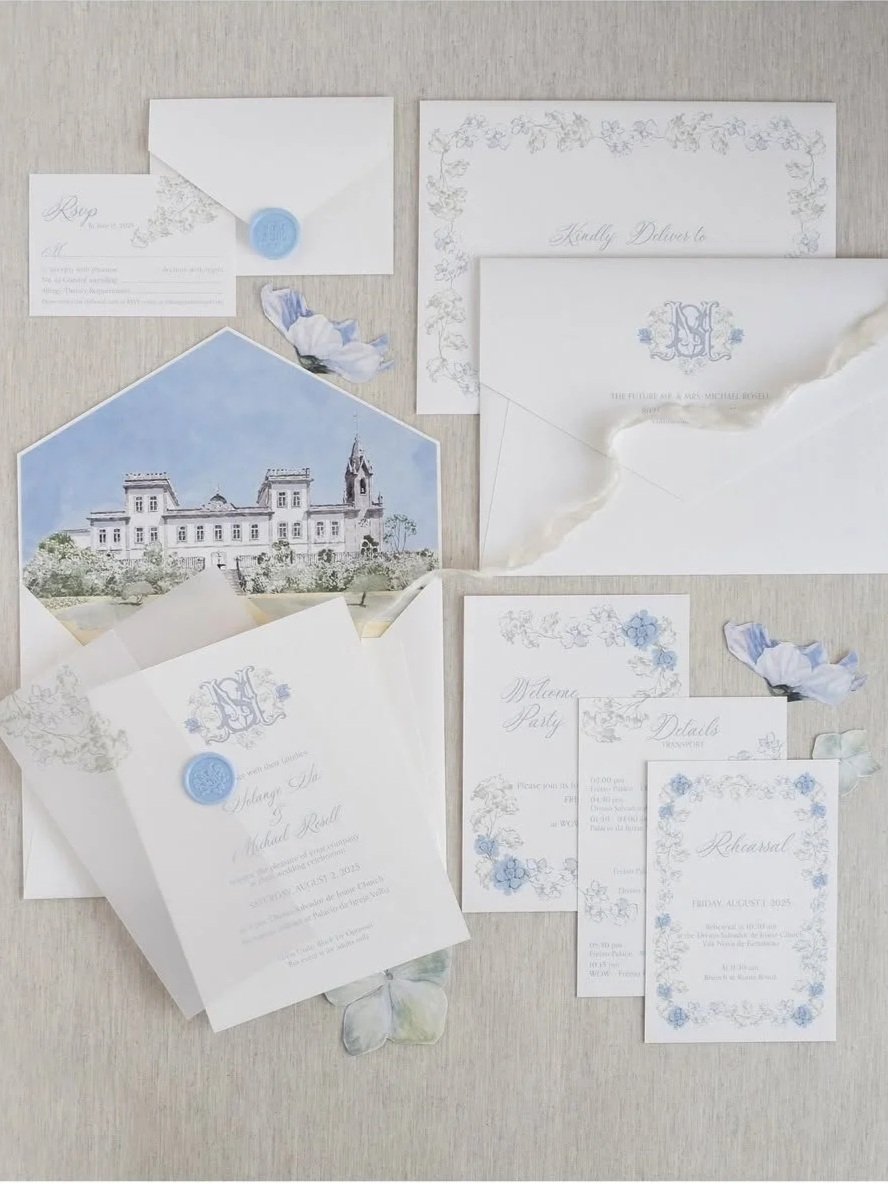
A wedding invitation is a special piece. It immediately stands out: an envelope made from distinctive paper, carefully addressed, promising the announcement of something very special.
If we dedicate time and creativity to designing an elegant invitation, addressing it properly becomes essential — only then can we create the complete experience for our guests.
And depending on the formality of the invitation, there are different ways to approach it. Let’s take a look.
Where to start
The guest list is ready, and the meticulous (and time-consuming) task of collecting and confirming mailing addresses is finally complete.
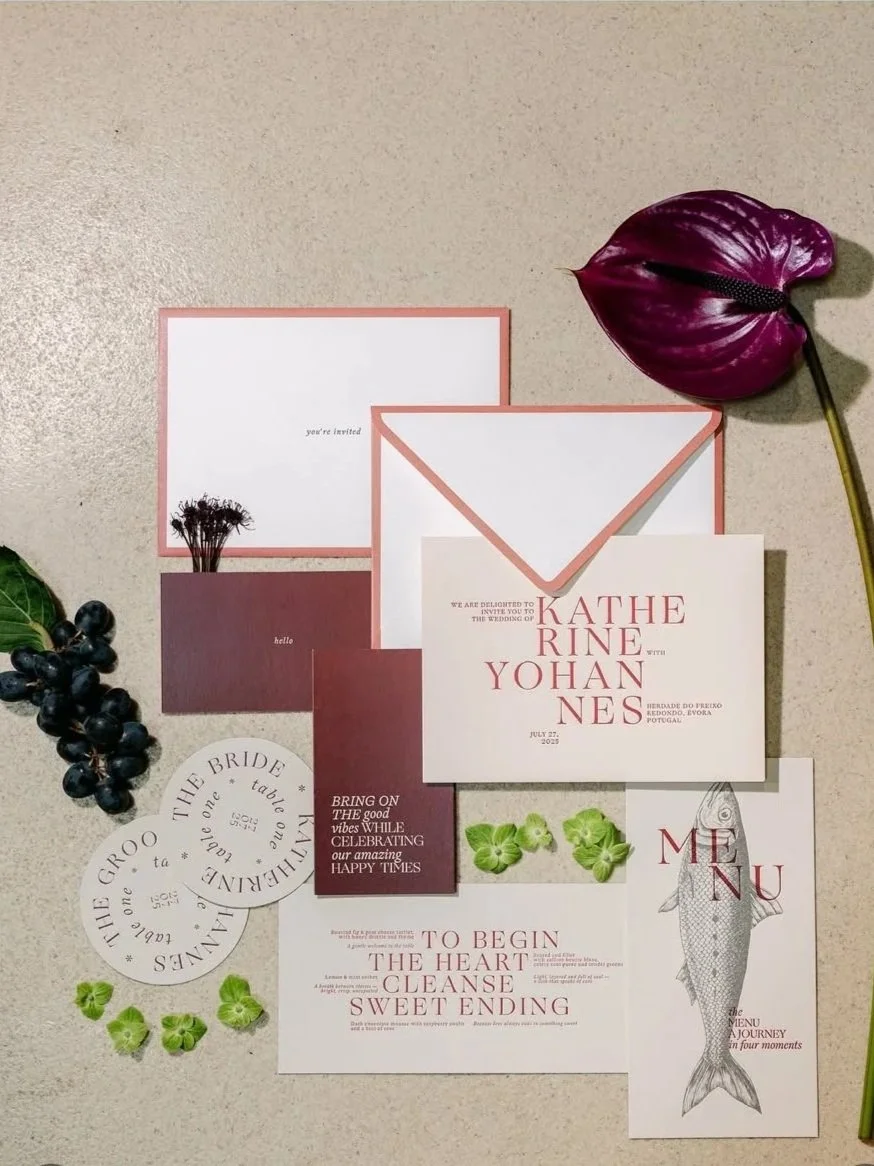
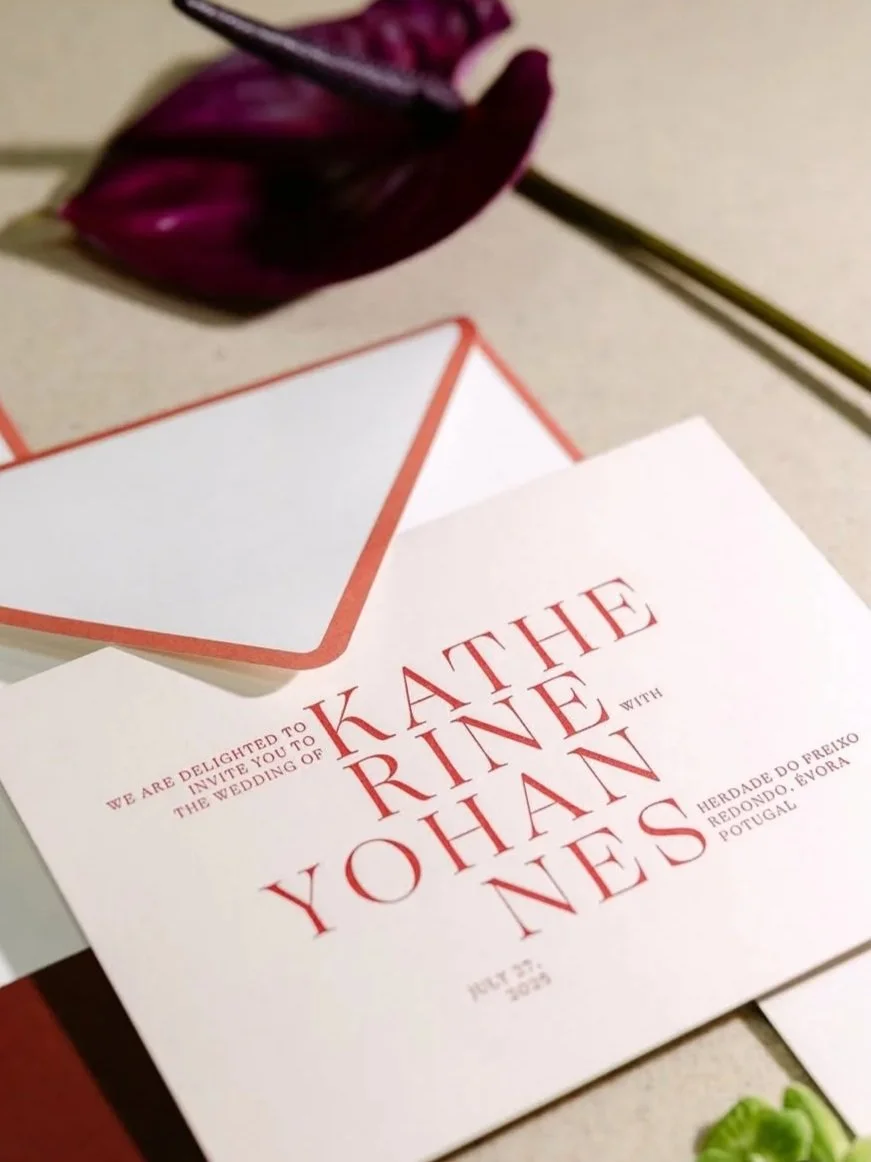
The invitation has been designed, and the next step is deciding how it will be addressed. You may choose to handwrite them in beautiful calligraphy that complements the invitation typography, or print guests’ names and addresses directly onto the envelope while maintaining the visual identity.
Things to keep in mind
It is important to pay attention to certain details — some for etiquette and courtesy, others for technical reasons.
Avoid unnecessary abbreviations such as “St.” instead of “Street” or shortened city names. The same does not necessarily apply to house numbers or apartment details.
Decorative typefaces should be used sparingly and reserved mainly for guests’ names.
For addresses, both the font and colour should remain highly legible, and sufficient contrast between the paper and lettering is essential (avoid blind embossing or very light colours). Additionally, the typography should be easy to read and margins should be respected. Nowadays, postal sorting systems are automated, and machines need to “read” the envelope without difficulty.
Where should each address go?
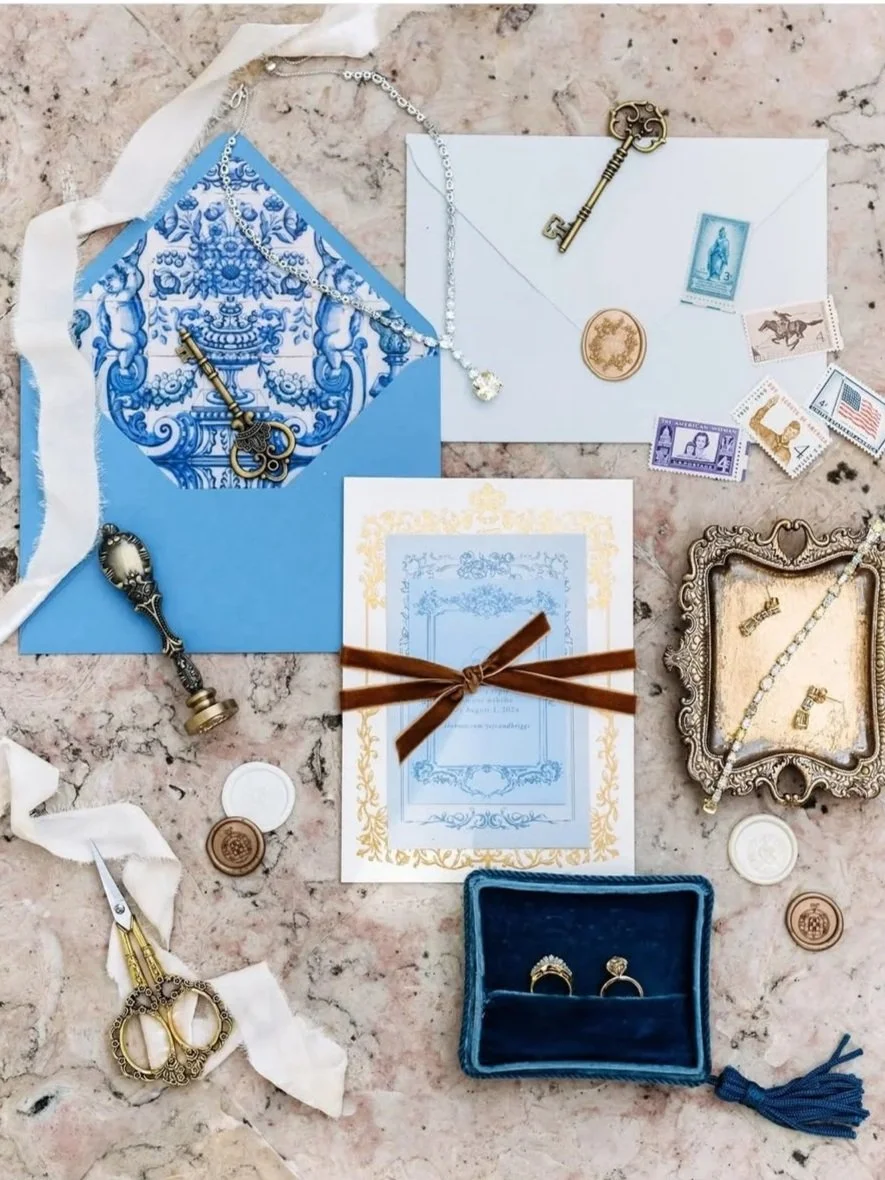
The back flap of the envelope is the ideal place for the sender’s address.
The recipient’s address should appear on the front, ideally in the lower right-hand section (to accommodate automated optical readers), or centred.
For larger envelopes, you may choose the more traditional approach, placing both sender and recipient information on the front in their respective positions.
How to address a wedding invitation
The formality of the event determines the language used.
For a formal invitation to a married couple sharing the same surname, traditional etiquette incorporates professional or social titles and the husband’s name: Mr. and Mrs. Carlos Gonçalves.
Although technically correct, this may not feel aligned with modern times. In that case, an alternative would be: Mr. Carlos Gonçalves and Mrs. Teresa Gonçalves.
If the couple has different surnames, tradition states that the wife’s name should be written first: Mrs. Joana Ferreira and Mr. António Pereira.
The “and” connecting the names traditionally indicates marriage. If they are not married, names should appear on separate lines.
For single guests, the appropriate format remains Mr. or Mrs./Ms. followed by their name, for example: Mrs. Teresa Santos or Mr. Rui Santos.
The address itself should remain simple and clear — children’s names shoul.
If the companion is known to the couple, both names should appear separately following the previous guidelines.
When using an inner envelope, a more formal approach includes titles and full names of all household members, while a less formal version may include only first names.

Time to send them
With your invitations properly addressed, it is time to plan their delivery.
The best way to prepare is to take one sample invitation to your local post office and clarify any questions beforehand.
Once shipping costs have been established, you can choose your stamps.
Portugal has a rich philatelic history, with wonderful stamp collections to suit different styles and tastes.
Set aside some time for this process, as your post office may not immediately have the quantity or design you want.
If you prefer something unique, CTT also allows personalised stamps featuring images that match your wedding identity and visual concept.
All that is left is to attach them (thankfully, they are self-adhesive these days), return to the post office, and send them off to their destinations.
I hope this information was helpful.
Photo Credits:
Featured Image
Telmo Mendes Weddings
Inline Images
1 and 2 A Pajarita
3 and 4 In Love Weddings | The Wedding Photographer PT
5 and 6 Molde Design Weddings | Tomislav Marcijus, Marko Dukic
7 Casa da Praia Weddings
8 Dream Weddings Europe | Love is my Favorite Color
9 Pedro Filipe Fotografia
10 Rosado Shoot Stories