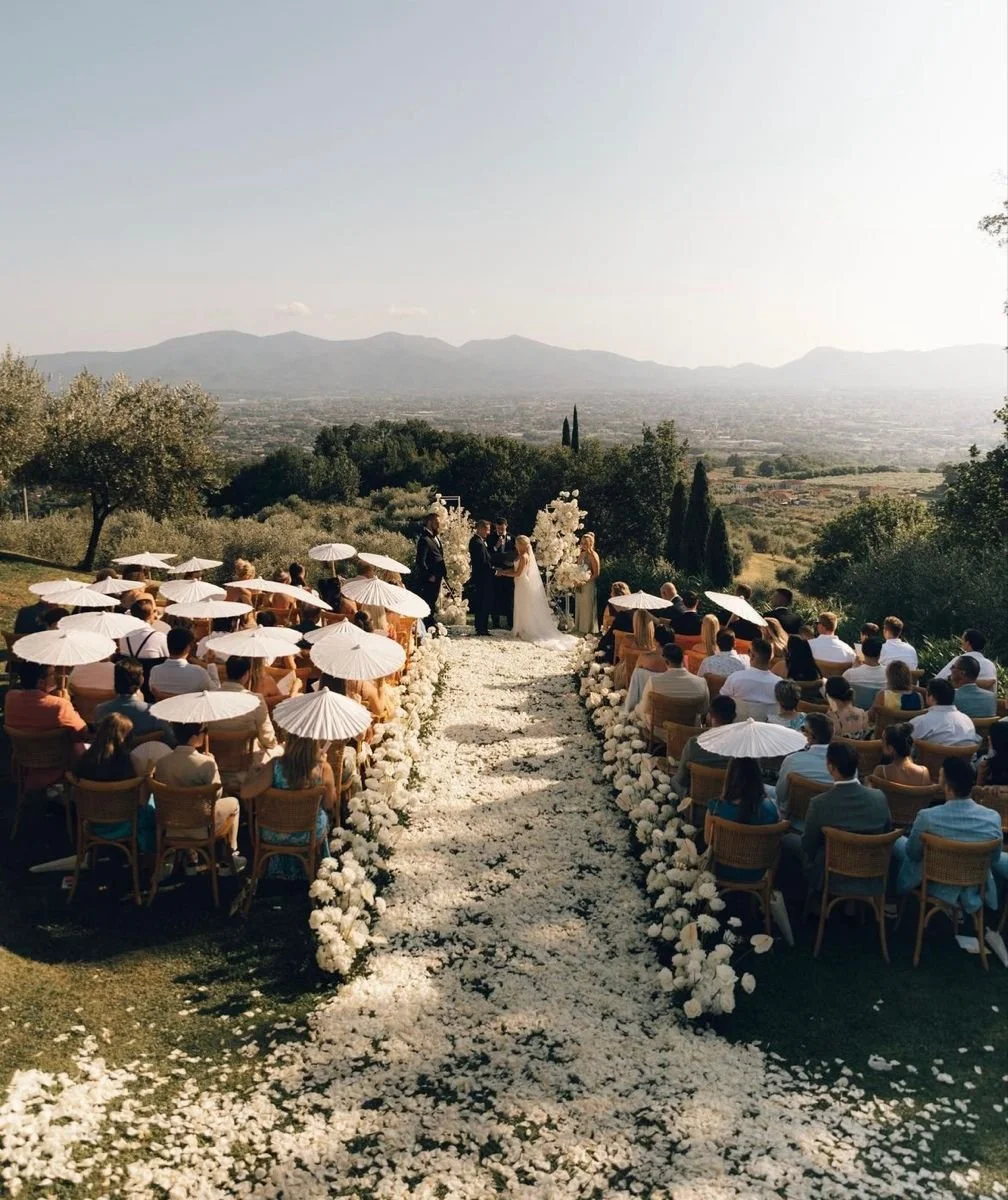
What is a Wedding Stationery?
By Alexandra Barbosa 01/04/2026
This is a question I’m often asked when meeting with my couples.
For those outside the graphic design world, the word stationery may feel unfamiliar and not particularly romantic. However, it simply refers to the collection of pieces that make up your wedding communication — extending far beyond the invitation and present from the very beginning of the planning process through to the end of the celebration.
Wedding stationery is, therefore, the set of paper elements that reflect your visual identity. It can begin with a save the date, continue with the wedding invitation that announces your long-awaited day, and conclude with the thank-you cards you will thoughtfully send to each guest.
In between, it may include a wide range of elements (map, ceremony booklet, programme, seating plan, menu, table numbers, place cards, gift tags, and more). This collection can be more or less extensive depending on your budget and the style of celebration you are planning.
Let’s briefly explore each stage: wedding announcement, ceremony, reception, and post-wedding.
The Wedding Announcement
The save the date precedes the invitation and serves to inform guests that something special is coming, allowing them to reserve your date in advance. It is particularly important when choosing a highly sought-after date — such as a public holiday, festive period, or long weekend.
Although not traditionally rooted in Portuguese culture, more and more couples are including this element in their wedding stationery.
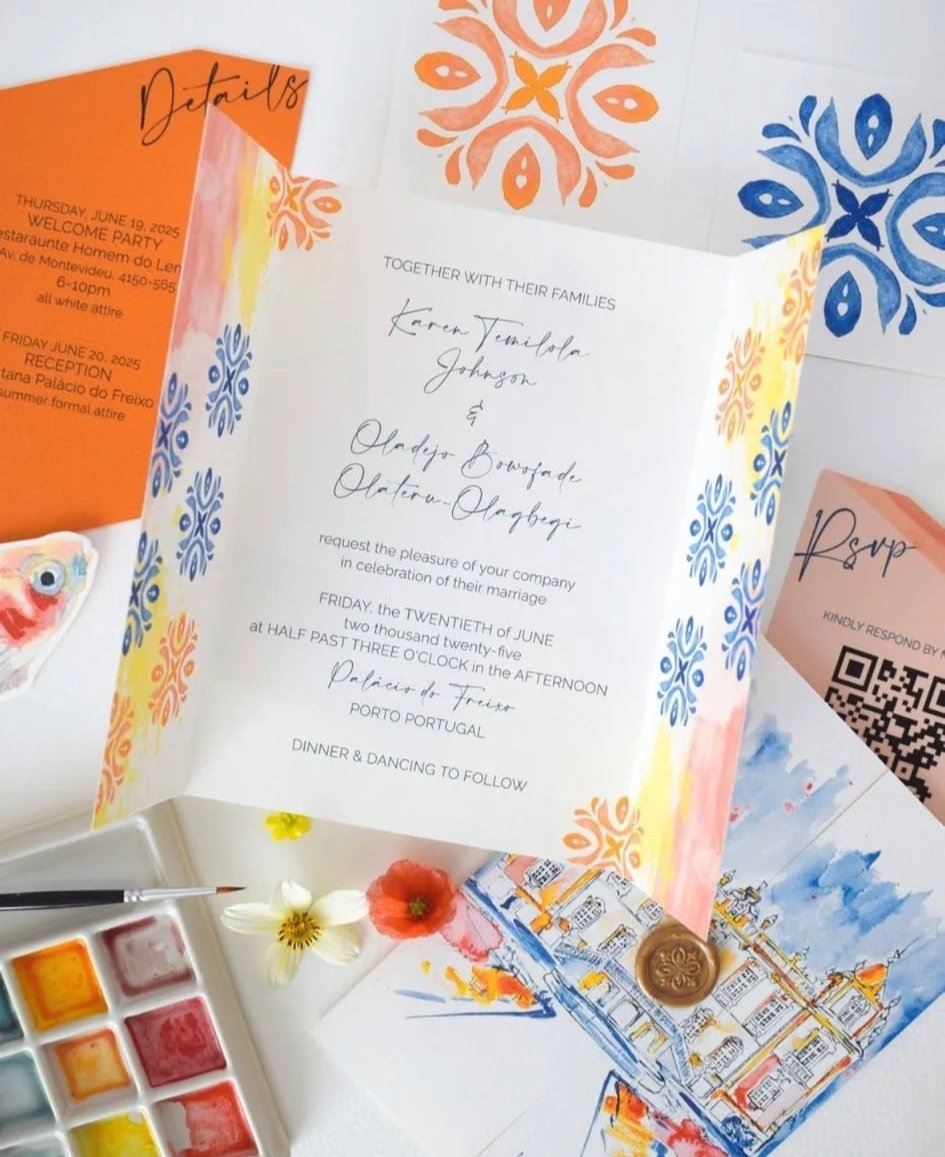
The wedding invitation is the first glimpse of your day and sets the tone for your visual identity. It announces your union and invites your loved ones to share that moment. It should reflect who you are as a couple. The first step is to decide what type of invitation best represents you and aligns with your budget.
The invitation may be accompanied by additional elements such as a details card, map, and RSVP:
• The details card includes additional information such as addresses, contacts, and other relevant details;
• The map illustrates directions between ceremony and reception venues or highlights key locations. It is increasingly being replaced by GPS coordinates;
• The RSVP (from the French Répondez S’il Vous Plaît, meaning “please respond”) facilitates guest confirmation. Etiquette suggests all guests should reply, confirming or declining attendance shortly after receiving the invitation.
All these elements follow the same visual language, maintaining harmony while offering variety within a cohesive identity.
During the Ceremony
Regardless of its level of formality, a wedding ceremony often requires guidance for guests. Providing clarity enhances comfort and experience:
• Welcome signage identifies the couple and the ceremony location, and can be formal, warm, or even playful — always aligned with your overall tone;
• The ceremony booklet includes readings, music, and the order of events, helping guests follow along;
• Vows are your most personal words, often presented in a booklet or card — more common in non-religious ceremonies;
• Confetti cones, bags, or baskets (for rice, petals, or eco-friendly alternatives) are also part of the stationery set.
For the Reception
Every celebration is unique, and so is its stationery. The range of elements is broad and flexible, depending on your vision:
• Welcome signage for the reception space;
• The seating plan, displaying guest names and table assignments;
• Table numbers or names, helping guests find their table;
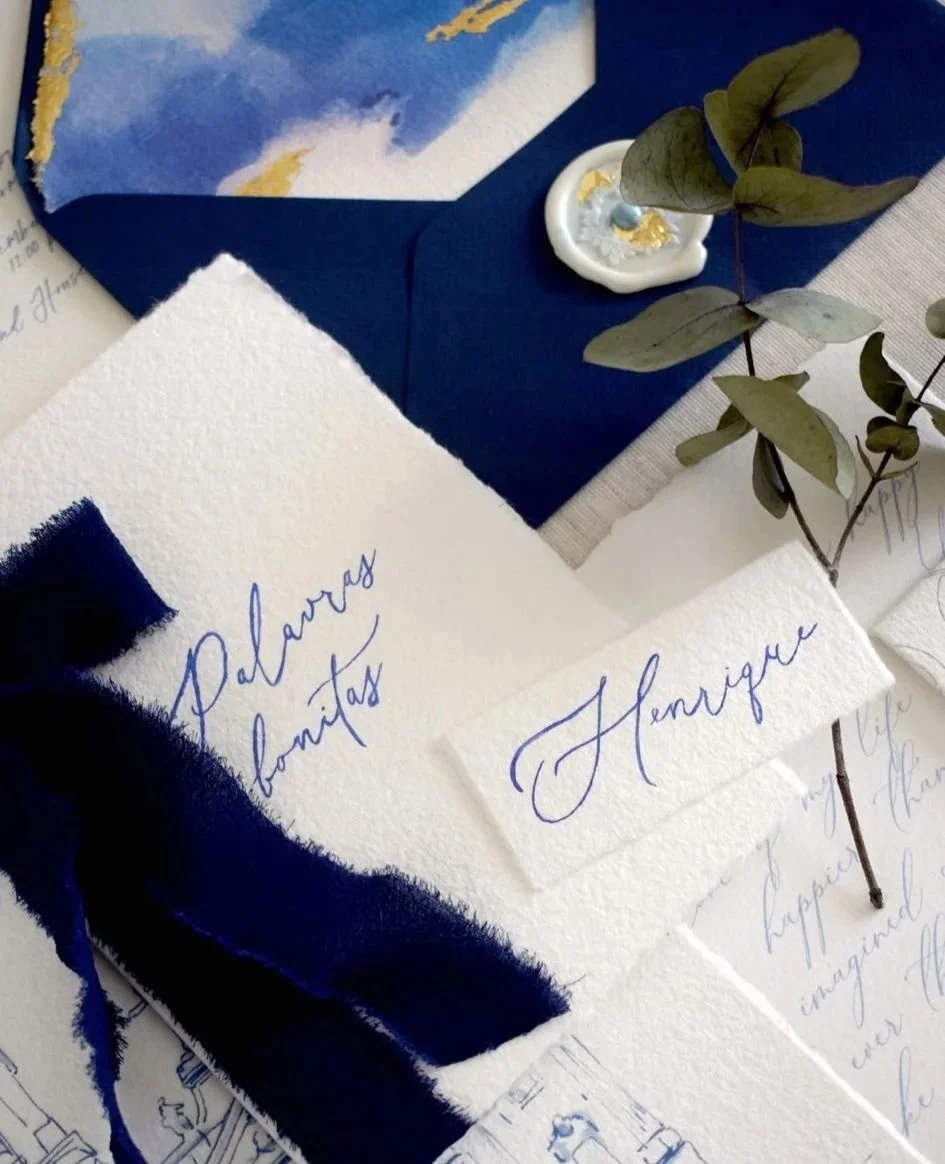
• Place cards, indicating each guest’s seat (often including a thank-you message or small gift);
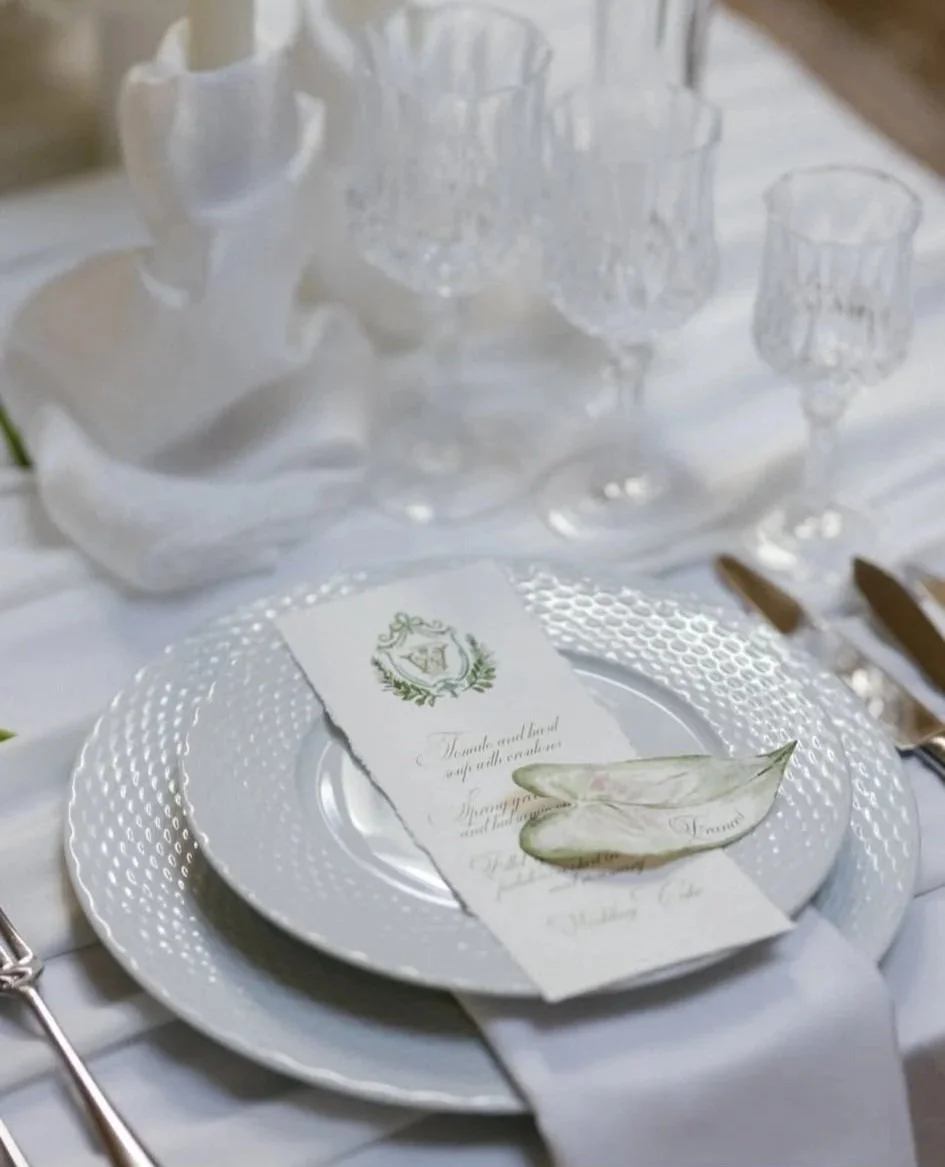
• The menu, presenting the meal (per guest or per table);
• Additional signage, guiding guests throughout the space;
• Guest books, for written or visual memories;
• Interactive prompts, encouraging guests to leave messages or photos;
• Custom illustrations or artwork, which can later become décor in your home;
• Gift tags for guest favours;
• Photo sleeves, if offering printed photos to guests;
• Thank-you cards, sometimes used in place of post-wedding notes.
After the Celebration
After the honeymoon, two final elements complete your stationery journey:
• The thank-you card, expressing gratitude for your guests’ presence and contribution;
• The wedding album, whose first page can reflect your entire visual identity, carefully designed and sent to your album designer.
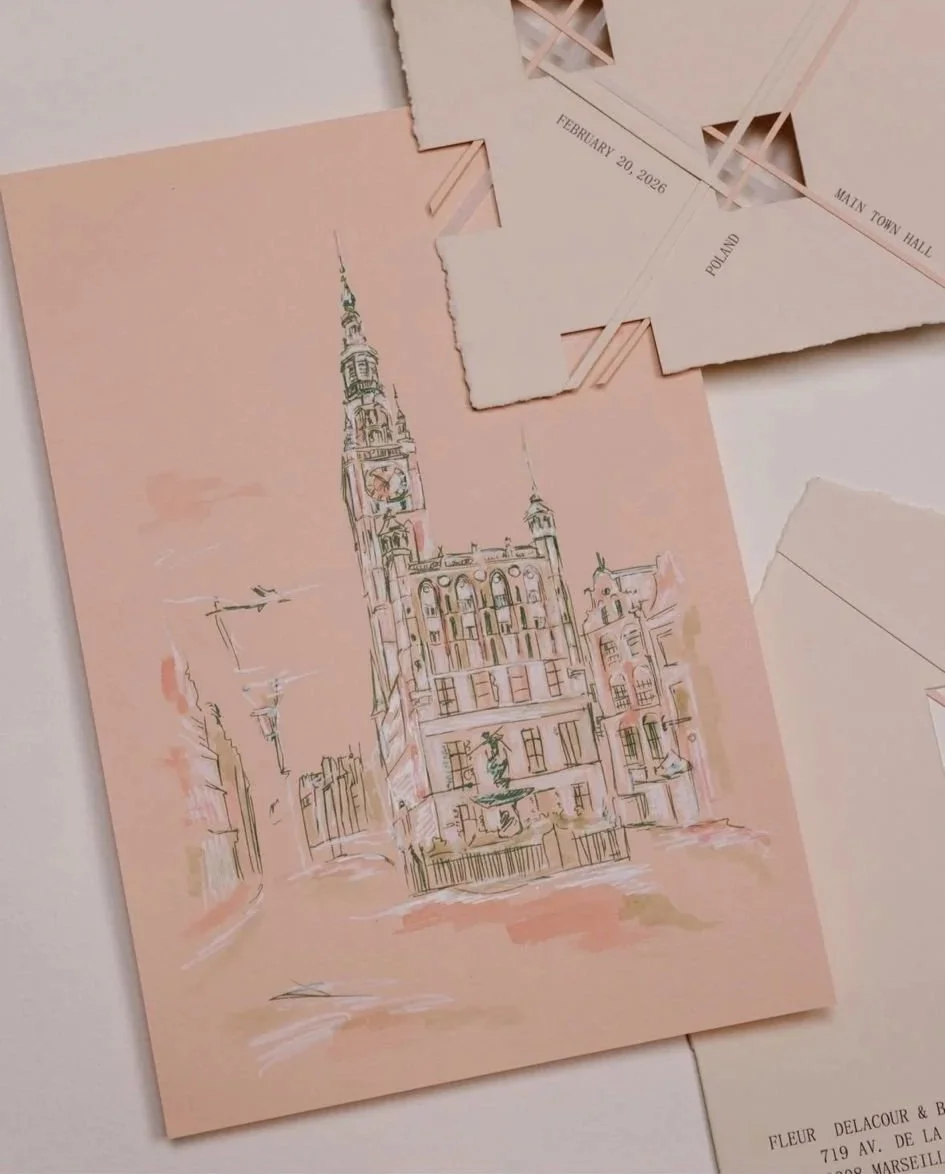
The word stationery likely feels much more meaningful now.
To create these pieces — or even more unique ones — speak in detail with your chosen designer. Graphic design can be distinctive, original, and go beyond traditional expectations. Nothing is mandatory — this is simply a set of suggestions.
Each piece can be admired individually, but together,
they tell your beautiful story.
Credits:
Original text by Alexandra Barbosa on A Pajarita.
English translation/ adaptation by Best of Portugal Weddings.
Photos:
1 and 2 A Pajarita
4 Branco Prata